Search This Blog

Showing posts with label Ronald bog Park. Show all posts

Tuesday, December 14, 2010

Impacts of the Big Storm on Shoreline Area


Cromwell Park is at the Headwaters of Thornton Creek.
The restored wetlands are retaining over 2 acre ft of stormwater,
that would otherwise have rushed into Ronald Bog downstream. 
This Week's Rainstorm Definitely Made 
an Impact of the Community for a few Days.

Ronald Bog was overtopping its normal
bank and was nearly up to the roadway at 175th and Meridian
photo credit-Janet Way
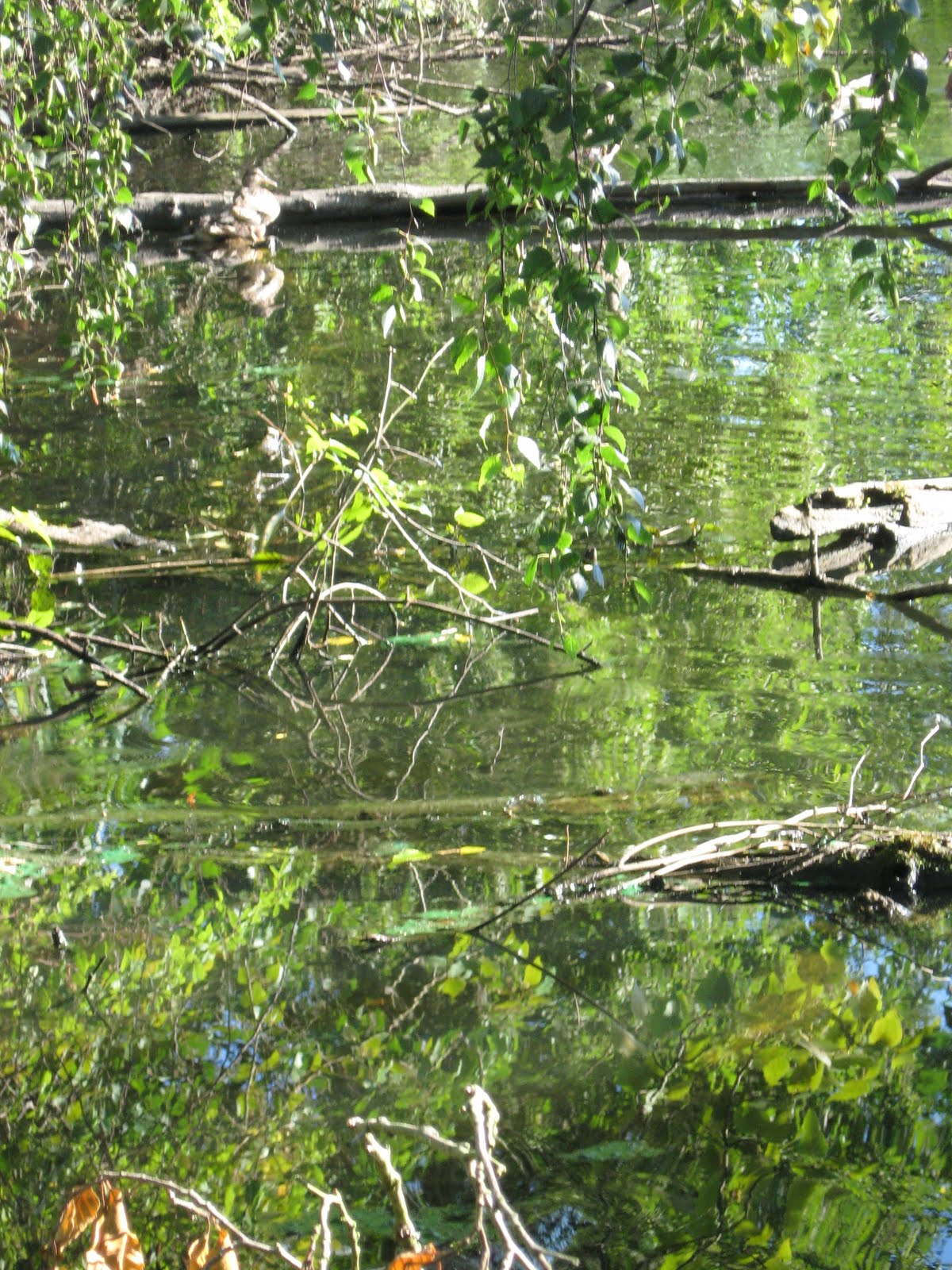
Close-up of Mallards enjoying the larger
Ronald Bog
Photo credit-Janet Way
Maybe it wasn't the worst storm ever, but the stormwater runoff was encroaching into people's consciousness more than last week's storm.
Shoreline is constructing a "flood containment" wall
just south of the Bog at Corliss Ave.
They do seem to have a muddy water problem though
on this side of the wall, and it's running
into this storm drain just below

Stormdrain does contain a water quality
"sock" or filter that is supposed to contain the
sediment, but I wonder if this one is
really doing the job?

Thornton Creek is the largest watershed in Shoreline and Seattle and is beset with many problems due to the impacts of stormwater.  It is a salmon stream, but one that has suffered many setbacks due to the impacts of unwise development over the last century. The stream provided habitat to 5 species of salmonids, and there were large numbers of these fish even until about 30 yrs ago. But as the cities and county permitted development and undetained stormwater runoff to detract from the water quality the fish need, it has been tough for the fish to survive. But they still want to come back and the cities are now trying to undo some of the damage of the last century.

Here, Littles Creek emerges from a culvert under 12th Ave NE and takes a sharp right turn heading for Paramount Park. 
Littles Creek was running very high on Sunday
Its volume of water is obviously overtaxing
this channel and culvert
Sunday, at Paramount Park, Littles Creek was overtopping
the crossing and making  temporary waterfall.
Every year these medium sized storms cause erosion
at this location and cause massive sedimentation in
the creek. The sediment is one of the most
destructive factors for salmon morbidity.
The salmon eggs ("reds")get smothered
by the sediments.
In another nearby watershed, MacAleer Creek is also running very full and caused some flooding downstream in Lake Forest Park.

MacAleer Creek emerges from under the
bridge and rushes into LFP with
heavy flows

Check Dam structure on MacAleer Creek.
Creek water is over topping the banks of the upstream section.
Residents and LFP City officials have been striving for many years to address the flooding and water quality problems which are caused by the stormwater runoff that impacts both MacAleer and Lyon Creek. Property damage, wildlife habitat and water quality issues are the subject of the Lake Ballinger Forum. Five Cities have been meeting for several years to work on solutions to these stormwater problems.

Also Lake Forest Park is trying to address these problems from several angles. Their Environmental Quality Commission and Urban Forests Task Force has championed a new Tree Ordinance which is based on increasing Tree Canopy. They acknowledge the need to utilize trees as a part of their infrastructure to combat stromwater problems.

There is clearly still a lot of work to be done to really get these problems under control, when the bigger storms come. It will take a lot of courage and concerted effort for municipalities to really get these problems under control. 

Low Impact Development (LID) is prescribed as the solution. It is mandated in the stormwater standards.
Let's look honestly at getting the ball rolling to put this technology to work. This is one way to bring green jobs to our communities to address a serious problem.

Tuesday, November 2, 2010

Big Bird Answer!

So, the answer I got from "experts" on my "Big Birds" roosting at Ronald Bog is.......
Cormorants surveying Ronald Bog for fish
photo credit-Janet Way
Double Crested Cormorants!
 Phalacrocoracidae  Pelecaniformes   
"Double-crested Cormorants, our largest, has an orange bill and thick neck.  While in flight, look for a slight "crook" at the base of the neck. If a perched cormorant is holding it's wings out, it's almost suredly a Double-crested." is the description on the Bird Web site through Seattle Audubon. 
photo credit-Cornell Lab of Ornithology
"All About Birds" copyright - Marie Read
So what is cool about seeing cormorants at Ronald Bog. Maybe they've been hanging out there for a long time, but there has been some question for years about Ronald Bog as fish habitat. But in just a few months, I have personally seen 3 large fish eating birds, visiting Ronald Bog. Great Blue Heron, Osprey and now Cormorants. 
So, I would say that the case is closed. Fish live in Ronald Bog! It's Fish Habitat and it is the headwaters of Thornton Creek! 

Now back to election coverage.

Bird Question?

So, a couple days ago, I spotted some "big birds" hanging out in a tall tree next to Ronald Bog.

Ronald Bog hosts many types of birds, including heron, many kinds of ducks and geese, swallows and even an osprey this summer.

But, I'd love your input on this one as a break from election day frenzy.
Please let me know what these are? Are they Loons, Grebes, or Cormorants?
Seattle Audubon even seems to have on in it's logo!
You can browse the "Bird Web" on SAS site to ID lots of local birds.
https://www.seattleaudubon.org/sas/LearnAboutBirds/BirdsofWashington.aspx
Do Loons hang out in tall trees?

Also, isn't it cool that Ronald Bog park and its neighbors provide these tall trees as refuge for so many bird species?

 You can click on the photo to enlarge.

Mystery birds at Ronald Bog

It's great that Shoreline has Ronald Bog as such a great bird watching location.

Thanks Bird Watchers!

Tuesday, August 17, 2010

Wildlife Photo Features - Great Blue Heron at Ronald Bog

Ronald Bog looking east. The shoreline was enhanced in last few years by volunteers who planted native plants and removed invasive weeds
(click on photos to enlarge and get a better look)
Monday Ronald Bog displayed an array of wildlife.
Here are a Great Blue Heron, Turtles and Ducks on a log

Ronald Bog is a City of Shoreline Park and is at the "headwaters" of the northbranch of Thornton Creek Watershed. (Cromwell Park is even further "upstream" and August 30th is the dedication of Cromwell Park renovation.) It is the largest watershed in Shoreline and Seattle.  It is home to 5 species of salmonids including chinook. The presence of a Great Blue Heron and other recent sightings of Osprey indicate the presence of fish.

Long ago Ronald Bog was "mined" for peat. This created the "lake like" habitat. 

The Great Blue Heron and turtles utilize a dead tree in the water. Logs and other wood in wetlands and creeks provide valuable habitat and are known technically as "LWD" or Large Woody Debris.

Ronald Bog is a well known bird watching site by Seattle Audubon members
and brings visitors to Shoreline


Many insects are present around Ronald Bog. 
Here is a native butterfly lighting on a native Vine Maple


Many kinds of ducks frequent the Bog. A Grebe was also
sighted at this outing.

Downstream, the City of Shoreline is beginning work on a project to improve Thornton Creek's flow and prevent flooding.


City is storing large culvert sections until they are installed under 
Corlis Place to provide improved stormwater capacity


Further downstream on King County property next to
the Metro Transfer Station, the creek flows in a section
of natural channel. The City installed "box culverts"
under road crossings that provide much improved fish habitat and 
protect surrounding neighborhoods from flooding.


Monday, August 2, 2010

Osprey Confirmations

Have now received many confirmations from Birders and even experts about my Osprey sighting at Ronald Bog Park in Shoreline on Friday, July 30th.  
Check my previous post from yesterday for details and photo.


Osprey 
photo credit-Seattle Audubon
http://www.birdweb.org/birdweb/bird_details.aspx?id=96

Here are some details from Seattle Audubon Bird Web -


General Description

North American Range
The Osprey is a unique bird that is unmistakable when seen at close range. It is the only species in its family, and it is found worldwide. Its breast and belly are mostly white, with some dark streaks. The white extends out the wings, but the primaries, secondaries, and tail feathers are mottled black-and-white. The back is mostly black or dark brown. The head is distinctive with a white crest, a face bisected by a dark eye-stripe, and yellow eyes. While there is much variation, the female tends to have a streakier breast than the male. The Osprey's talons are uniquely adapted for catching and carrying fish: their surfaces are rough, and their toes can be held with three forward and one back, or with two forward and two back, an arrangement seen in owls but not in other diurnal raptors. In flight, they are most often confused with gulls because of their long wings, which are bent at the wrist. However Ospreys have a bounce to their flight that gulls 


Habitat

Ospreys live near rivers, estuaries, salt marshes, lakes, reservoirs, and other large bodies of water. They are rare along rivers in the shrub-steppe zone, as they prefer water surrounded by forested habitat. They can be found near fresh or salt water, as long as the water can sustain medium-sized fish.

Behavior

Ospreys hover over the water, plunging feet first when they spot prey. They fly with slow wing-beats interspersed with glides. Ospreys form pair bonds through aerial flight displays and courtship feeding.

Diet

The vast majority of the Osprey's diet is fish, typically 5-16 inches in size. Only occasionally, when fish aren't available, will the Osprey eat small mammals, birds, or reptiles. However, the Osprey is highly specialized for eating fish and does not stray from this diet unless necessary. When it catches a fish, the Osprey usually flies with it held headfirst.

Nesting

Ospreys build large nests near water, on top of dead trees or artificial structures that are similar to dead trees, such as utility or nesting poles. Nests are made of branches, sticks, and twigs, lined with smaller twigs, grasses, bark, moss, fish bones, and other material. They will reuse nests year after year and continue to add sticks each year, ending up with a huge nest. Nests may be more than seven feet across and over five feet deep. The female typically lays 3 eggs, although clutch sizes between 2 and 4 eggs are normal. Both members of the pair incubate the eggs for 38-43 days. After the young hatch, the female stays with them, and the male brings food. Once the young can be left alone, both parents provide food. The young do not fledge until they are 44-59 days old.

Migration Status

Ospreys are migratory, the majority wintering south of the US border. Most reports of Ospreys wintering in Washington are likely to be misidentifications of sub-adult bald eagles.

Conservation Status

The Osprey suffered great declines in the past century as a result of DDT and other eggshell-thinning pesticides. Since the ban of DDT in 1972, the Osprey has made, and continues to make, a strong comeback in much of North America. Range expansion into formerly occupied areas has been slow due to their strong philopatry to nesting areas. Artificial nest platforms have significantly increased nesting in many areas. The Breeding Bird Survey has reported a significant increase in the Osprey population in Washington.

Thanks to all who care about Wildlife Habitat in Shoreline! 


Send me more sightings! 


Happy birding!


Janet

Sunday, August 1, 2010

Ronald Bog Park in Shoreline - Teaming with Wildlife!

One half hour visit to Ronald Bog Park on Friday, July 30th yielded a satisfying 
wildlife sighting total.

Most exciting was a possible sighting of an Osprey atop a snag next to the water.
Please help us ID this bird!

photo credit-Janet Way
Have you seen this bird at Ronald Bog? 
What other birds have you seen there?

Also sighted -

• nine ducks
• uncountable swallows
• many turtles
• robin
• one rat
• many dragon flies

 
                    Northern Shoveler (?)


                              Dragonfly 


Ducks on logs, can you see them? 

In the past many other water fowl, fish (and fishermen), and a beaver have been seen. What creatures have you seen?

Let us know.